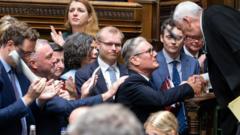
UK Prime Minister Keir Starmer delivered his final Prime Minister's Questions on Wednesday, marking the symbolic conclusion of his tenure at 10 Downing Street. The House of Commons observed the moment with unusual bipartisan respect, as MPs from across the political spectrum offered tributes to the outgoing leader.
Starmer described the occasion as "the end of my political journey," acknowledging the weight of stepping down after leading the Labour Party to power. The session took on a reflective tone, departing from the typical combative nature of PMQs. Opposition members, including those from the Conservative Party, traded lighthearted exchanges with Starmer rather than launching attacks. MPs shared personal anecdotes and acknowledged his service, creating a rare moment of parliamentary civility.
The farewell underscores Labour's turbulent tenure in government. Starmer's departure comes after internal party pressures and electoral challenges tested his leadership. His stepping down signals a transition period for the party as it searches for fresh direction and new leadership.
PMQs has historically served as a weekly battleground where sitting premiers defend policy and parry opposition criticism. Starmer's final appearance inverted that dynamic, transforming the chamber into a space for reflection rather than partisan sparring. The respectful tone reflected recognition across Westminster that Starmer's exit marks a significant political moment.
Labour now faces the task of selecting a successor while managing continued governance. The party must rebuild momentum after internal fractures and navigate public perception in the wake of leadership instability. Starmer's final PMQs provided a ceremonial close to his premiership, though his political legacy remains contested and incomplete.