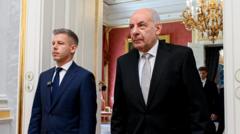
Hungary's parliament voted to remove President Tamás Sulyok from office, stripping him of his position after just months in the role. Sulyok, who assumed the presidency in May following Viktor Orbán's loss of power in April, faced the motion as lawmakers moved to fundamentally reshape the country's leadership structure.
Sulyok had been widely viewed as an Orbán loyalist, raising concerns among reformers and opposition parties that he would obstruct the new government's agenda. His removal signals a decisive break from the previous regime's influence over state institutions. The vote reflects broader tensions in Hungarian politics as the country undergoes a significant transition after Orbán's 16-year grip on power.
The parliamentary action targets not just Sulyok but the legacy of Orbán's administration, which faced repeated criticism from the European Union over democratic backsliding and judicial independence. The new government, which took office following Orbán's electoral defeat, has prioritized restoring institutional balance and distancing Hungary from the former prime minister's network of appointees.
This constitutional move underscores deepening fractures within Hungarian politics. Sulyok's swift exit from the presidency, coming within months of taking office, demonstrates the new coalition's determination to prevent continuity with Orbán-era governance. The motion passed with sufficient parliamentary support, indicating backing from the governing coalition and possibly some opposition figures aligned on this particular issue.
Hungary's institutional upheaval continues as lawmakers work to reassert checks on executive power and dismantle the centralized control that characterized Orbán's lengthy tenure. The removal sets the stage for a new presidential selection process that the current government hopes will place a non-aligned figure in the largely ceremonial but symbolically important role.