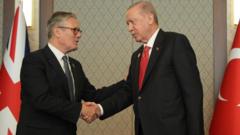
UK Prime Minister Keir Starmer received a pistol and ammunition as a gift from Turkish President Recep Tayyip Erdogan during a NATO summit. The weapon remained in Turkey with British officials rather than being transported back to the United Kingdom.
The exchange occurred at a multilateral NATO gathering, where leaders customarily exchange ceremonial gifts. Turkish protocol dictated the presentation of the firearm to the British PM. However, British officials determined that importing the weapon into the UK would present administrative and legal complications, so the decision was made to leave it secured with embassy staff in Ankara.
The move reflects practical handling of gift-giving between allied nations at high-level summits. NATO members frequently present items during state visits and official functions, though those gifts don't always travel home with recipients. The British government's choice to store the pistol abroad follows standard procedures when accepting weapons from foreign leaders creates domestic logistical or regulatory hurdles.
This gift exchange underscores the ceremonial dimension of NATO leadership meetings, where alliance-building extends beyond security discussions and military strategy into formal diplomatic gestures. The UK and Turkey maintain NATO partnership ties, and such exchanges are part of the broader diplomatic protocol that accompanies summits of the Western alliance.
The incident drew public attention primarily because of the unusual nature of gifting firearms at contemporary political events, even within the context of formal state ceremonies. British media coverage focused on how officials navigated the practical implications of accepting the Turkish president's gift while maintaining compliance with UK firearms regulations.