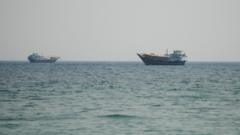
Iran escalated regional tensions by launching strikes against US military installations across the Middle East, claiming hits on bases in Kuwait, Jordan, and Bahrain. The attacks came in direct retaliation for recent US military action, marking a sharp intensification of the tit-for-tat cycle gripping the Persian Gulf.
The Strait of Hormuz remains the flashpoint. This chokepoint handles roughly one-third of global seaborne oil trade, making any disruption there a threat to energy markets worldwide. US military presence in the region centers on protecting shipping lanes and containing Iranian expansion, while Iran continues probing American resolve through proxy forces and direct strikes.
The sequence matters for what it signals. US strikes prompted an Iranian response that targeted multiple allied positions simultaneously. This multi-front approach shows Iran willing to test American defenses across several countries at once, not just in Iraq or Syria where previous exchanges occurred.
Energy markets will watch closely. Oil prices typically spike when Strait of Hormuz security deteriorates. Traders monitor whether either side escalates further or whether the exchange satisfies face-saving demands on both sides. Previous cycles have shown these exchanges can cool quickly if neither power wants broader conflict.
The Kuwait, Jordan, and Bahrain claims matter geographically. Kuwait hosts a major US air base. Jordan sits near Syria, where Iranian militias operate. Bahrain hosts the Fifth Fleet. Hitting all three suggests Iran coordinated attacks across its regional network simultaneously, a tactical step beyond previous limited strikes.
Casualty reports and damage assessments remain unclear, typical in the early hours after such incidents. What's clearer is the pattern. Each side strikes. The other responds. The cycle continues unless diplomacy interrupts it. So far, neither Washington nor Tehran has signaled intent to de-escalate, leaving the Strait of Hormuz and global energy supplies in a precarious position.