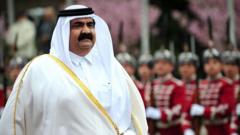
Sheikh Hamad bin Khalifa Al Thani, the former emir who reshaped Qatar into a global energy and sports powerhouse, died at age 74. He seized control in 1996 through a bloodless coup against his father, fundamentally altering the nation's trajectory over nearly two decades of rule.
During his tenure, Sheikh Hamad orchestrated Qatar's emergence as a liquefied natural gas exporter and positioned the country as a major player in international diplomacy and sports hosting. His government secured the 2022 FIFA World Cup, the most expensive tournament in history, and bankrolled the construction of world-class infrastructure across Doha. He also founded Al Jazeera in 1996, establishing Qatar's first major media outlet and eventually building it into a globally recognized news network.
Sheikh Hamad stepped down in 2013, transferring power to his son, Tamim bin Hamad Al Thani, who currently serves as emir. The transition marked a generational shift while maintaining continuity in Qatar's strategic vision.
His rule coincided with Qatar's rise from a relatively modest Gulf state to a nation commanding outsized influence in Middle Eastern politics, finance, and culture. The state's massive sovereign wealth fund, established during his reign, became one of the world's largest investment vehicles.
The former emir's death closes a chapter on one of the Arab world's most consequential modern transformations. His legacy extends far beyond Qatar's borders, shaping regional geopolitics and establishing precedents for how smaller Gulf states leverage natural resources and soft power to punch above their weight on the global stage.