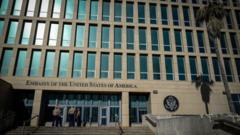
The U.S. State Department announced a $3 million compensation package for victims of Havana Syndrome, a mysterious neurological condition that has affected American diplomats, intelligence officials, and their families since around 2016. The condition first surfaced among U.S. embassy staff in Havana, Cuba, where diplomats reported sudden onset of hearing loss, vertigo, headaches, and cognitive difficulties.
The syndrome's origin remains unconfirmed. Initial suspicions centered on directed energy weapons or acoustic attacks by foreign adversaries, though Cuban authorities denied involvement. Investigations by the National Academies of Sciences and the FBI have produced inconclusive findings, with some researchers suggesting environmental factors or mass psychogenic illness may explain clusters of cases.
Over 200 cases have been documented worldwide, spanning diplomatic posts in China, Russia, and Europe. Affected individuals reported severe symptoms impacting their careers and personal lives. Many underwent extensive medical testing with no definitive diagnosis. The mysterious nature of the condition fueled debate within intelligence and diplomatic circles about workplace safety and government accountability.
The compensation represents federal acknowledgment of victims' suffering and medical expenses, though it stops short of definitively identifying a cause. The payout covers roughly 130 individuals from the State Department and CIA who met specific criteria for Havana Syndrome. Some affected diplomats and spies have pursued legal action against the government for inadequate response and insufficient medical support.
The settlement signals a shift in how Washington addresses the syndrome. Previously, the government maintained cautious skepticism about reported symptoms. The payment indicates acceptance that affected individuals warrant assistance regardless of whether a single causative agent is ever identified. Ongoing research continues, with several federal agencies coordinating investigation efforts.