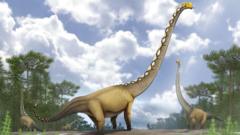
Paleontologists discovered a new long-necked dinosaur species in Thailand, reshaping our understanding of sauropod distribution across ancient Asia. Named Uragasaurus kalasinensis, the herbivore roamed the region approximately 150 million years ago during the Late Jurassic period.
The creature's neck stretched to extraordinary lengths, comparable to a cricket pitch in span. This extreme anatomy allowed the plant-eater to access foliage unreachable to shorter contemporaries, a competitive advantage in crowded ecosystems. The discovery comes from fossil remains unearthed in Kalasin Province, northeastern Thailand, where sedimentary layers have preserved Jurassic-era specimens for millions of years.
Uragasaurus kalasinensis expands the known range of sauropods across Southeast Asia. Previous fossil records concentrated sauropod discoveries in other regions, leaving gaps in the paleontological map. This find fills those gaps and suggests these giants inhabited diverse geological settings beyond previously documented sites.
The creature belonged to the titanosaur lineage, among Earth's largest land animals ever recorded. Its neck structure shares characteristics with other long-necked sauropods yet displays unique features specific to its species and geographic origin. Researchers examined bone structure, vertebrae, and skeletal proportions to confirm its status as a previously unknown species.
The Late Jurassic period witnessed the peak of sauropod dominance. Uragasaurus kalasinensis thrived in a world before extinction events reshaped global fauna. Its discovery provides evidence that sauropod species achieved remarkable diversity and occupied ecological niches across multiple continents simultaneously.
Fossil discoveries in Thailand remain relatively uncommon compared to paleontological hotspots in North Africa or South America. This find underscores the importance of continued excavation and exploration in understudied regions. Each new species revelation deepens understanding of how prehistoric ecosystems functioned and how species adapted to their environments millions of years before human existence.