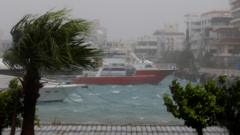
China is preparing for a second typhoon strike within seven days as Typhoon Bavi approaches landfall in eastern coastal regions. Authorities have evacuated hundreds of thousands of residents from Zhejiang Province, with the city of Wenzhou positioned near the storm's projected path.
The back-to-back typhoons intensify pressure on China's eastern seaboard, already battered by the first system. Zhejiang, one of China's most economically developed provinces and a manufacturing hub, faces severe disruption to ports, transportation networks, and industrial operations. The consecutive storms strain emergency response infrastructure and complicate recovery efforts from initial damage.
Wenzhou, a major shipping and manufacturing center with a population exceeding 9 million, sits in a precarious position. The city's proximity to Bavi's trajectory heightens flood and landslide risks. Authorities have suspended public transportation, closed schools, and activated emergency protocols across the region.
Double typhoons within a week represent a rare meteorological event for coastal China. Climate patterns are shifting typhoon frequency and intensity in the Western Pacific, creating compounding hazards for densely populated areas. The rapid succession leaves limited time for infrastructure repair and supply chain restoration between storms.
The evacuations reflect China's emergency management capacity but also underscore the mounting climate pressures on its eastern coast. Economic losses from dual typhoons could reach billions, affecting everything from cargo shipping to manufacturing output. Zhejiang's critical role in China's export economy means disruptions ripple through global supply chains for electronics, textiles, and chemicals.
Meteorological agencies continue tracking Bavi's intensity and trajectory. Forecasts suggest the system may weaken before landfall, though significant rainfall and coastal flooding remain probable regardless. The human and economic toll depends on storm strength at impact and evacuation success rates in the final hours before the system makes landfall.