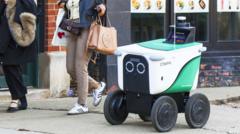
Delivery robots are sparking a backlash across American cities. Residents and local officials are pushing back against the autonomous vehicles clogging sidewalks, and several municipalities have moved to ban them outright.
Cities including San Francisco, Pittsburgh, and Washington D.C. have introduced restrictions or outright prohibitions on robot deliveries. Protest groups have formed in neighborhoods where the machines operate, with residents complaining they create pedestrian hazards and clutter public spaces. One frustrated pedestrian told reporters, "We had to get out of the way," capturing the friction between innovation and daily street life.
The robots, deployed by companies like Waymo, Amazon's Scout, and Starship Technologies, promise faster, cheaper last-mile delivery. They've gained traction in select markets over the past few years. But their rapid expansion has outpaced public acceptance. Accessibility advocates worry the devices block wheelchair users and people with visual impairments. Parents express concern about child safety around unpredictable autonomous systems.
Local officials face competing pressures. Tech companies argue the robots reduce emissions and labor costs. Delivery services view them as essential infrastructure for next-day logistics. Cities, however, must answer to constituents frustrated by the proliferation of robots navigating their neighborhoods without clear regulation.
The bans reflect a broader pattern in American tech adoption. Communities increasingly demand a voice in how autonomous systems integrate into shared public space. Rather than accepting innovation as inevitable, residents are organizing to preserve sidewalk accessibility and quality of life.
San Francisco's decision to limit robot deployments signals that even tech-friendly cities have limits. As robotics companies push expansion timelines, the street-level resistance suggests they'll need community buy-in, not just regulatory approval.