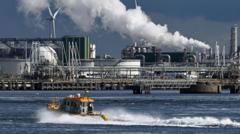
A lawsuit against Europe's largest port pressures Rotterdam to accelerate its fossil fuel exit. Environmental groups and activists filed legal action demanding the Port of Rotterdam move faster to cut ties with oil and gas companies that operate within its sprawling complex.
The port handles roughly 470 million tons of cargo annually and serves as a critical gateway for European trade. It processes massive volumes of petroleum products, chemicals, and liquified natural gas. The facility's dependence on fossil fuel infrastructure creates both economic leverage and environmental liability. Rotterdam generates substantial revenue from oil majors and energy traders who use its terminals, pipelines, and storage facilities.
The lawsuit reflects growing pressure on Europe's energy infrastructure to align with the EU's 2050 climate neutrality target. Port operators face conflicting demands. They need investment capital to remain competitive globally, yet investors increasingly scrutinize their carbon exposure. The Port of Rotterdam has committed to net-zero emissions by 2050, but critics argue the timeline lacks urgency and concrete interim targets.
Environmental groups contend that Rotterdam cannot reach climate goals without accelerating divestment from fossil fuel companies now. The port's current strategy relies on carbon capture technology and efficiency improvements that activists view as insufficient. They demand explicit bans on new fossil fuel infrastructure expansion.
Rotterdam's leadership counters that abrupt severance from energy companies would devastate local jobs and regional economy. The port employs tens of thousands directly and indirectly, with energy sectors providing crucial employment. Port officials maintain they can reduce emissions while maintaining partnerships with energy firms transitioning their own operations.
The lawsuit adds legal muscle to climate activism already targeting European energy hubs. Similar pressure has mounted against ports in Antwerp and Hamburg. This case will test whether courts can force infrastructure operators to accelerate decarbonization faster than politically negotiated timelines allow. The outcome shapes how aggressively Europe's physical economy must pivot toward fossil fuel independence.