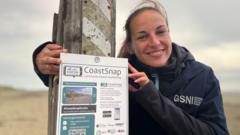
Beach visitors uploading holiday photos to social media are helping scientists track coastal erosion and environmental change. Researchers are mining these images to study long-term shifts in shorelines, sand patterns, and ecosystem health across the globe.
The approach taps into what scientists call "citizen science," where the public unknowingly contributes data by sharing photos on Instagram, Facebook, and other platforms. Computer vision algorithms analyze thousands of images taken at the same locations over months and years, revealing patterns invisible to casual observers. The method proves especially valuable in remote regions where traditional monitoring stations don't exist.
Coastal erosion accelerates under climate change pressures. Rising sea levels, intensified storms, and shifting currents reshape beaches faster than ever. Ground surveys alone cannot cover enough territory or span long enough timeframes. Crowdsourced photos fill that gap.
Researchers at several institutions now develop tools to automatically extract beach conditions from tourist snapshots. The technology identifies vegetation loss, sand migration, and structural damage to coastal infrastructure. A single beach might accumulate thousands of geotagged photos annually, creating a visual archive that documents environmental transformation in real time.
The data proves especially powerful when comparing images from the same location across years. A beach that looked stable in 2018 might show dramatic retreat by 2023. These visual comparisons communicate climate impacts more vividly than raw erosion measurements.
The project faces challenges. Photo quality varies wildly. Angles, lighting, and timing shift between images. Not all beaches attract equal tourist attention. Yet scientists argue the method's scale and accessibility outweigh these limitations. Millions of people visit coasts annually, each potentially contributing data without extra effort.
This approach represents a shift in how environmental science operates. Rather than treating the public as passive subjects of research, institutions now leverage the billions of images people already create. The beach photos you upload could help scientists understand how your coastline is changing.