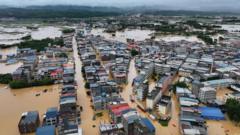
Typhoon-driven flooding and tornadoes swept across China, trapping families in villages and cutting off access to food and aid. Survivors told the BBC that water rose with alarming speed, overwhelming communities with little warning or preparation time. The rare tornado activity compounded the disaster, expanding the damage zone beyond typical typhoon patterns.
Villages in affected regions reported severe supply shortages as floodwaters blocked roads and isolated population centers from rescue operations. Families trapped in inundated areas described desperate conditions while waiting for assistance. Local authorities faced logistical challenges coordinating relief efforts across terrain reshaped by the storm.
The typhoon's intensity and unusual tornado formation highlight shifting weather patterns in the region. Tornadoes remain uncommon in China during typhoon events, making this storm's behavior notable for meteorologists tracking extreme weather trends. The combination of flooding and twister activity created compounding hazards that standard disaster protocols struggled to address simultaneously.
Rescue teams mobilized to reach stranded populations, but the scale of displacement and infrastructure damage slowed recovery operations. Agricultural areas sustained crop losses alongside residential damage, threatening food security in impacted zones. The disaster underscores vulnerability in rural villages with limited infrastructure redundancy and communication systems prone to failure during major storms.
Weather forecasters noted the system's rapid intensification and the speed of water accumulation as defining characteristics. Climate data suggests such extreme precipitation events are becoming more frequent across Asia-Pacific regions, raising concerns about long-term preparedness and infrastructure resilience in vulnerable communities.