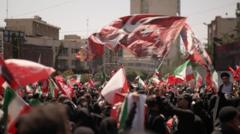
Iran's three-day state funeral for Supreme Leader Ayatollah Ali Khamenei transformed into a calculated political performance. The regime orchestrated an elaborate display of public mourning in Tehran designed to project strength and unity to both domestic audiences and the international community.
The funeral ceremonies served multiple strategic purposes for Iran's leadership. Organizers constructed the spectacle around themes of resistance and continuity, framing Khamenei's death not as a moment of vulnerability but as an occasion to reassert Iran's defiance against Western pressure. The choreographed nature of the mourning rituals reflected the regime's determination to control the narrative surrounding its most powerful office.
State media saturated coverage of the ceremonies, broadcasting images of massive crowds gathering in Tehran's streets. These visuals functioned as propaganda tools, demonstrating the government's reach and ability to mobilize populations. The regime sought to convince observers, both Iranian citizens and foreign governments, that institutional stability remained intact despite the loss of a leader who held power for thirty-four years.
The funeral also carried implicit messaging about succession and authority. By orchestrating such a prominent public display, Iran's leadership signaled that power transfers would occur without disruption or challenge to the system. Khamenei's death created a potential moment of instability that the regime moved quickly to contain through ceremonial grandeur and nationalist rhetoric.
The political symbolism extended to Iran's regional positioning. The three-day spectacle reinforced Iran's narrative of steadfast resistance against external adversaries, particularly the United States and Israel. Funeral proceedings emphasized continuity of Iran's ideological commitments and military posture rather than dwelling on succession uncertainties or internal disagreements.
International observers monitored the ceremonies closely for signs of internal fracture or leadership disputes. The tightly controlled nature of the public mourning suggested the regime had already settled succession questions behind closed doors before Khamenei's death became public.