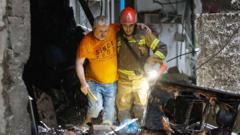
Ukraine faces a critical shortage of air-defense interceptors after Russia launched one of its largest aerial assaults on the nation Sunday. President Volodymyr Zelensky reported the attack involved 68 missiles and 351 strike drones targeting Kyiv and surrounding regions. The barrage killed at least 23 people in the Kyiv region alone.
Ukrainian officials have repeatedly warned that their supply of interceptor missiles cannot sustain the current pace of Russian attacks. The country relies heavily on Western-supplied air-defense systems, including Patriot batteries and NASAMS platforms, but these weapons require a steady flow of ammunition that has proven difficult to maintain. Each Russian strike requires multiple interceptors to neutralize the incoming threat, depleting stocks faster than they can be replenished.
The scale of Sunday's assault underscores the asymmetry Russia has engineered in this conflict. Moscow can produce missiles domestically and sustains attack operations at a relentless tempo, while Ukraine scrambles to defend against waves that sometimes number in the hundreds. Western allies, particularly the United States and European NATO members, have struggled to match Ukraine's demand for air-defense munitions.
Zelensky's public acknowledgment of the shortage serves dual purposes. It highlights Ukraine's immediate vulnerability and signals to Western partners that more aid is urgently needed. The interceptor gap represents one of the war's most pressing logistical challenges. Without a sustained flow of these systems, Ukraine cannot maintain the air-defense umbrella that protects civilian populations and military infrastructure from continuous bombardment.
Russia has deliberately escalated attacks on civilian targets in recent months, making interceptor availability a matter of survival for Ukrainian cities. The shortage threatens to erode Ukraine's ability to absorb future barrages without catastrophic casualties.