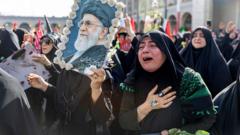
Iran's Supreme Leader Ayatollah Ali Khamenei remains absent from public view following the death of his son, Mojtaba Khamenei, a senior official in Iran's theocratic hierarchy. High-ranking Iranian officials attended funeral proceedings, but the Supreme Leader did not appear, marking a notable departure from protocol in Iran's power structure.
Mojtaba Khamenei, who held significant influence within Iran's government and military apparatus, has not been seen publicly since an attack that occurred at the outbreak of hostilities between the US, Israel, and Iran. His death underscores the volatile security environment facing Iran's leadership during escalating regional tensions.
The absence of Ayatollah Ali Khamenei from his son's funeral raises questions about both his health and his current capacity to manage state affairs during a critical geopolitical moment. In Iran's system, the Supreme Leader holds absolute authority over the military, judiciary, and state media, making his visibility and active engagement essential to demonstrating continuity of governance.
Mojtaba's role as a bridge between Iran's military and political establishment meant his death removes a key player in succession planning and decision-making. His younger brother, Seyed Mohammad Khamenei, and other family members connected to the Iranian Revolutionary Guard Corps hold substantial power, but Mojtaba occupied a unique position of trust and operational influence.
The funeral attendance by senior officials serves a dual purpose. It publicly acknowledges the loss while signaling that Iran's government remains functional despite losing a figure close to its highest authority. Yet the Supreme Leader's continued absence from public events fuels speculation about potential instability at the top of Iran's power structure during a period when the nation faces military pressure and internal governance challenges.