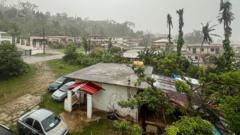
Super Typhoon Bavi is bearing down on Guam with catastrophic intensity. The U.S. territory faces winds exceeding 160 miles per hour and waves reaching nearly 11 meters high when the storm makes landfall Monday.
Authorities have ordered evacuations across the island as residents brace for one of the most dangerous typhoons to threaten the region in years. The sustained winds alone will cause severe structural damage to homes and buildings. Storm surge combined with those towering waves poses extreme flooding risks, particularly in coastal areas where much of Guam's population concentrates.
Guam, a strategically important U.S. military hub in the western Pacific, hosts thousands of active-duty personnel and their families at Andersen Air Force Base and Naval Base Guam. The storm threatens military operations and civilian infrastructure simultaneously. Schools and government offices have closed. Residents are stockpiling supplies and preparing shelters.
Typhoon Bavi follows a season of intensifying Pacific storms. The Western Pacific basin has produced multiple Category 4 and 5 systems in recent months, a pattern consistent with warming ocean temperatures. Guam's position in Typhoon Alley means frequent exposure to these monster storms, but their increasing severity strains emergency response capabilities.
Forecast models show the storm maintaining near-peak intensity through Monday's predicted landfall. Residents face roughly 24 to 48 hours to complete preparations. Power outages lasting days are likely. Water and fuel supplies remain critical concerns once the typhoon passes, as recovery and rebuilding efforts begin immediately.