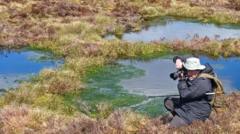
Peatlands cover just 3 percent of Earth's surface but store twice as much carbon as all forests combined. This makes their restoration one of the most potent climate weapons available. A Welsh scientist known as "The Bogfather" is leading that charge.
The scientist's work focuses on restoring degraded peatland across the UK and beyond. Peatlands have been drained for agriculture and development for centuries, releasing stored carbon into the atmosphere and reducing their capacity to absorb future emissions. Restoration involves rewetting these landscapes and allowing natural vegetation to regrow.
The impact scales quickly. Restored peatlands transition from carbon sources back to carbon sinks within years. A single hectare can sequester the equivalent of one car's annual emissions once rehabilitation is complete. Across degraded UK peatlands alone, potential carbon storage reaches into the billions of tons.
The Bogfather's approach combines traditional ecological knowledge with modern climate science. Teams remove drainage channels, reintroduce native sphagnum mosses, and allow water tables to rise. This creates conditions where decomposition slows dramatically, halting carbon releases that have plagued these ecosystems for generations.
Funding and political will remain obstacles. Peatland restoration competes with agricultural interests and requires sustained investment. Yet momentum builds. The UK government has committed to restoring 50,000 hectares of peatland by 2037. Similar pledges emerge across Europe.
The Bogfather's childhood fascination transformed into a career addressing one of climate change's most overlooked solutions. His work proves that restoring nature's carbon vaults offers tangible emissions reductions without waiting for technological breakthroughs. Peatlands had been written off as wastelands. Now they represent frontier territory in the climate fight.