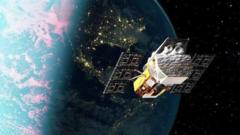
NASA launched a robotic spacecraft to intercept and salvage a defunct space telescope before it re-enters Earth's atmosphere and burns up. The mission represents an unprecedented effort to capture and deorbit a satellite in controlled fashion, avoiding uncontrolled debris that could threaten other spacecraft and the International Space Station.
The robot spacecraft will rendezvous with the falling telescope in orbit, dock with it, and use its thrusters to lower the satellite into a designated disposal zone over the ocean. This technique marks a shift in how space agencies handle end-of-life satellites, moving away from allowing them to burn up randomly during atmospheric re-entry or leaving them as orbital debris.
The operation addresses growing concerns about space traffic management. As more satellites populate low Earth orbit, controlled deorbiting becomes essential. The mission demonstrates technological capability to service, repair, and remove spacecraft remotely. It opens doors for future applications like satellite repair, refueling, and debris removal.
NASA coordinated the mission with international partners to ensure the controlled re-entry path minimizes risk to populated areas. The procedure involves precision maneuvering in space and careful coordination of timing and trajectory calculations. Success requires the robotic spacecraft to identify, approach, and physically engage with a non-cooperative target, a capability previously tested only in limited scenarios.
The mission builds on growing commercial interest in on-orbit servicing. Companies like Axiom Space and Northrop Grumman already develop spacecraft designed to dock with and service satellites. This NASA-funded operation validates the business case and technical feasibility of these services at scale.
The operation underscores how space exploration has matured from simple launch-and-forget missions to active, hands-on management of orbital assets. As humanity accumulates more machinery in space, the ability to control what happens to aging equipment becomes as important as launching it.