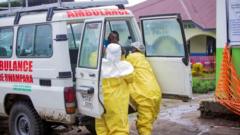
A clinical trial testing experimental Ebola treatments has launched in the Democratic Republic of Congo as the country battles an active outbreak. The outbreak has confirmed 1,406 cases and caused 438 deaths, with another 301 suspected cases under investigation, according to WHO data.
The trial represents a critical shift in DRC's response strategy. Rather than relying solely on supportive care and containment, health authorities are now testing pharmaceutical interventions directly on patients in active transmission zones. This approach accelerates data collection on which treatments work best in real outbreak conditions, not laboratory settings.
The DRC faces recurring Ebola crises. Since 2018, the country has experienced multiple outbreaks, each straining resources and testing response capabilities. Healthcare workers remain vulnerable despite training and protocols. Effective treatments could shift mortality rates substantially. Current case fatality rates hover around 31 percent in this outbreak, consistent with recent DRC strains.
Experimental antivirals and monoclonal antibody treatments show promise in previous outbreaks. The trial will generate evidence on efficacy, dosing, and safety profiles specific to the circulating strain. Results could inform treatment guidelines across Central Africa, where Ebola resurges periodically.
The trial's timing matters. Early intervention increases survival odds. As case counts climb and health systems strain, proven treatments become essential tools alongside vaccination campaigns and isolation measures. WHO coordination with DRC's Ministry of Health ensures the trial meets international safety standards while moving at outbreak pace.
Success here could reshape how the global health community responds to hemorrhagic fever outbreaks. The DRC has become ground zero for testing and refining Ebola response protocols. Data from this trial will influence treatment protocols in future outbreaks across the continent.