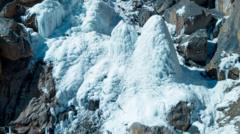
Himalayan villages in India's Ladakh region have engineered a low-tech solution to water scarcity. They're building artificial ice pyramids, also called ice stupas, that preserve winter snow and meltwater through the harsh, dry spring months when crops need irrigation most.
The structures work by channeling glacial meltwater through pipes into shaded mountain valleys during winter. As temperatures drop, the water freezes into towering cone-shaped formations that can reach 40 meters high. Unlike natural glaciers that shrink annually, these artificial reserves hold water in frozen form until spring arrives and farming season begins.
The innovation emerged from necessity. Climate change has accelerated glacier melt across the Himalayas, leaving villages without reliable water supplies when they need them most for planting. Traditional irrigation methods have failed as snowpack disappears earlier each year. The ice pyramids solve this timing problem without requiring expensive dams or complex infrastructure.
Ladakh engineer Sonam Wangchuk popularized the technique in the early 2000s, and dozens of villages have since adopted it. The approach costs roughly $10,000 to $15,000 per structure, far cheaper than conventional water projects. A single ice stupa can store millions of liters of water.
The method's success has caught international attention as communities worldwide grapple with water stress. It demonstrates how indigenous knowledge combined with simple engineering can address climate adaptation challenges. Farmers report successful harvests after implementing the system, with some villages creating multiple stupas to ensure adequate supply.
However, the solution faces limits. Warmer winters reduce ice formation, and some years yield insufficient freezing temperatures. Villages continue experimenting with stupa placement and pipe configuration to maximize effectiveness. The structures remain a stopgap rather than permanent fix for the region's deepening water crisis, but they offer tangible relief where alternatives remain scarce.