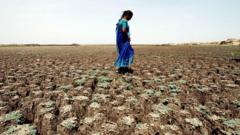
India's agricultural sector faces mounting pressure after the country recorded its driest June in more than a decade, with monsoon rainfall falling well below seasonal averages across major farming regions.
The shortfall threatens crop yields during a critical planting window. June marks the onset of the southwest monsoon, the lifeblood of Indian agriculture. Weaker precipitation directly impacts sowing schedules and early crop development, particularly for staple crops like rice, wheat, and pulses that feed the nation's 1.4 billion people.
The timing compounds existing vulnerabilities. India's agricultural output remains heavily dependent on monsoon patterns, with roughly half the country's farmland lacking irrigation infrastructure. Delayed or insufficient rains force farmers to ration water, delay plantings, or risk crop failure entirely. Rural income instability then ripples through rural economies, historically triggering debt cycles and migration to cities.
The government acknowledges the rainfall deficit but projects confidence in its grain reserves. Officials stated that strategic stockpiles of foodgrains exceed buffer-stock requirements, providing cushion against supply disruptions or price spikes. This buffer strategy emerged from lessons learned during previous droughts and famines that destabilized food security and triggered inflation.
However, government assurances carry limited reassurance for farming communities. While central reserves may stabilize national markets, they don't guarantee equitable distribution or prevent localized crop failures from devastating smallholder farmers. Agricultural economists warn that prolonged dry conditions could reduce yields by 10-20 percent depending on regional severity, straining both farmers' incomes and export competitiveness.
India remains the world's largest exporter of rice and a major exporter of pulses. A sustained productivity dip could reshape global commodity markets and elevate food prices in import-dependent nations. Meteorological forecasts for July and August rainfall patterns will determine whether June's deficit represents an anomaly or signals a longer dry spell ahead.