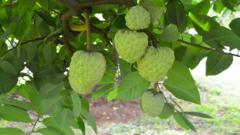
Custard apples are experiencing a surge in global demand, driven by their creamy texture and vanilla-like flavor that appeals to premium fruit markets. The tropical fruit, native to Central America but now cultivated across Asia, Africa, and the Caribbean, commands high prices in export markets where consumers pay top dollar for specialty produce.
Farmers praise custard apples for their resilience. The plants thrive in challenging growing conditions, requiring minimal water and pesticide inputs compared to other tropical fruits. This hardiness makes them attractive to producers in water-stressed regions and those seeking sustainable farming practices.
The export challenge centers on the fruit's extreme fragility. Custard apples bruise easily during harvest, packing, and transport. The delicate skin ruptures under minimal pressure, and the fruit deteriorates rapidly once picked. This creates a narrow window for getting fresh fruit from farm to market, limiting export distances and increasing logistics costs significantly.
India, the Philippines, and Pakistan lead custard apple production, but competition for international sales intensifies as supply chains improve. Exporters invest in specialized packaging, refrigerated containers, and expedited shipping to preserve fruit quality. Some producers focus on niche European and North American markets willing to pay premium prices for the exotic product.
The fruit's nutritional profile, rich in fiber and antioxidants, positions it as a health-conscious alternative to conventional tropical fruits. Retailers in upscale grocery chains increasingly stock custard apples, though availability remains inconsistent and pricing steep for mainstream adoption.
Climate change adds complexity. Rising temperatures stress custard apple orchards in traditional growing regions, forcing producers to adapt cultivation techniques or migrate operations to higher altitudes and cooler areas.
For now, custard apples remain a luxury item. Success in scaling exports depends on solving the fragility problem through better breeding, packaging innovation, or processing into value-added products like pulp or frozen segments that survive transport more reliably.