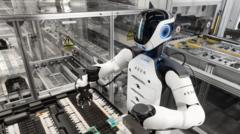
BMW is deploying humanoid robots on its European manufacturing floors, accelerating the automaker's shift toward automation in vehicle assembly. The move follows comparable initiatives the German luxury carmaker piloted stateside, signaling a broader industry bet on humanoid labor for factory work.
The robots handle tasks in BMW's production line that traditionally required human workers. Humanoid design allows them to operate in spaces built for human workers, eliminating costly factory redesigns that wheeled or stationary robots demand. This flexibility cuts implementation time and capital expenditure, a major advantage as labor costs and supply chain pressures mount across European manufacturing.
BMW's investment reflects an industry-wide recognition that humanoid robots represent the next evolution in automotive assembly. Tesla, Boston Dynamics, and other firms developing these machines have positioned them as solutions to labor shortages and the need for precision work in car manufacturing. The robots can perform repetitive tasks with consistency while freeing human workers for complex problem-solving roles.
The timing matters. Europe faces sustained labor market tightness and rising wages. Simultaneously, automotive brands compete fiercely on production efficiency as electric vehicle adoption reshapes manufacturing demands. Humanoid robots offer BMW a competitive edge on both fronts.
However, the rollout raises labor questions. German auto unions have historically negotiated strict automation safeguards, and this deployment will likely trigger contract discussions about retraining and job protection. BMW's move signals confidence in humanoid viability, but implementation speed will depend on labor negotiations and the robots' actual performance in high-volume production environments where reliability is non-negotiable.