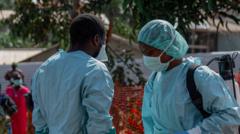
Armed men stormed a hospital in the Democratic Republic of Congo, seizing a six-year-old Ebola patient in a brazen abduction that underscores the dangerous intersection of medical misinformation and active disease containment efforts.
The incident occurred amid a surge in attacks on health facilities across the DRC, where vaccine hesitancy and conspiracy theories fuel community resistance to treatment protocols. Local populations, driven by fear and false narratives about Ebola's origins and transmission, have increasingly turned violent toward medical workers and institutions.
This abduction severely hampers outbreak response operations. Health officials depend on isolating confirmed cases to prevent transmission chains. The child's removal from medical supervision creates immediate public health risks. Contact tracing becomes nearly impossible when patients vanish from clinical monitoring.
The broader pattern reflects a critical challenge facing disease control in conflict-affected regions. Distrust of authorities compounds the biological threat. Armed groups sometimes exploit medical mistrust as a tool of control, further destabilizing health infrastructure.
Previous Ebola outbreaks in the DRC documented similar violence, but the scale of facility attacks during this outbreak marks an escalation. Health workers face threats that force temporary closures, disrupting care for non-Ebola patients as well.
International health organizations operating in the DRC have condemned the attacks and called for community engagement to rebuild trust. Education campaigns aim to counter misinformation, but progress remains slow in regions with limited communication infrastructure and deep-rooted suspicion of outsiders.
The child's whereabouts remain unknown. Recovery of the patient represents both a medical imperative and a test of authorities' ability to protect vulnerable populations during health emergencies.