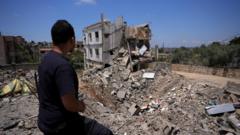
Lebanon's ceasefire between Israel and Hezbollah, brokered with U.S. and Iranian involvement, has brought temporary relief but deep skepticism among the population. After months of intense bombardment that displaced over a million people, the fragile quiet holds for now, yet fundamental questions about the agreement's durability remain unresolved.
The truce, which took effect recently, represents a significant diplomatic intervention by the United States aimed at de-escalating tensions in the Middle East. However, Lebanese civilians and analysts express little confidence the ceasefire will stick. Hezbollah, the Iranian-backed militant group and political party that controls significant territory in southern Lebanon, has a decades-long history of conflict resumption. Israel maintains that it reserves the right to resume operations if threats persist.
The agreement leaves several critical issues unaddressed. No clear timeline exists for Israeli military withdrawal from Lebanese territory. Hezbollah's southern positioning and weapons stockpiles remain largely intact. Iranian support networks that supply the group continue operating. Meanwhile, Lebanese infrastructure destroyed during the fighting awaits reconstruction with no international funding mechanism yet established.
Public opinion reflects exhaustion rather than optimism. Families who fled their homes face uncertainty about return timelines. The Lebanese state, already paralyzed by economic collapse and political dysfunction, lacks capacity to enforce disarmament or reestablish central authority over areas Hezbollah controls.
International observers note the ceasefire addresses symptoms rather than causes. Regional rivalries between the U.S. and Iran, Saudi Arabia's interests, and Israel's security concerns remain fundamentally unresolved. The agreement functions as a pause button rather than a genuine settlement, leaving Lebanon suspended between tentative peace and the threat of renewed violence. Without addressing underlying tensions and establishing credible enforcement mechanisms, this quiet could prove temporary.