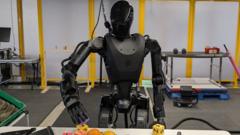
Military programs worldwide are testing humanoid robots for potential combat and support roles, though actual battlefield deployment remains years away. Defense departments in the US, China, and Europe have begun trials with bipedal machines designed to operate in environments too dangerous or constrained for traditional platforms.
The US Department of Defense has funded research into humanoid systems that could perform logistics, reconnaissance, and hazardous materials handling. China's military has similarly invested in robotics development. These machines offer tactical advantages in urban terrain, tight spaces, and rubble-strewn disaster zones where wheeled or tracked robots struggle. Their human-like form factor allows them to navigate stairs, doorways, and equipment designed for human operators.
However, significant obstacles remain before deployment becomes viable. Battery life limits operational duration to hours rather than days. AI systems struggle with complex decision-making in unpredictable combat scenarios. Durability under field conditions, cost per unit, and the technical challenges of autonomous movement across rough terrain all present engineering barriers.
Military ethicists and technologists emphasize that humanoid robots will likely function as force multipliers rather than autonomous killers. Immediate applications focus on supply transport, mine detection, and other support missions. Full autonomy in lethal targeting decisions faces both technical and policy constraints.
The trajectory suggests incremental integration. Militaries may deploy humanoids for non-combat tasks first, establishing operational protocols and maintenance procedures. From there, expanded roles follow. Defense contractors including Boston Dynamics competitors are positioning themselves for future contracts, though near-term contracts favor traditional drone and unmanned vehicle platforms with proven track records.
The technology's military potential drives investment, but realistic timelines run longer than headlines suggest. Expect experimental use within five to ten years, with broader adoption following the successful resolution of engineering, policy, and ethical questions.