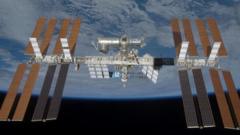
Five astronauts sheltered in their Soyuz spacecraft while Russian cosmonauts attempted repairs on a leaking tunnel section of the International Space Station. The precautionary measure kept the crew safe during work on the Zvezda module, which has experienced persistent air pressure issues.
The ISS leak, located in a rarely used service tunnel, presented manageable but concerning pressure loss over time. Russian mission control initiated the safe-haven protocol, directing the five astronauts to return to their docked Soyuz capsules while repairs proceeded. This procedure allows for quick evacuation if the situation deteriorates.
The affected crew members, representing multiple space agencies, remained calm during the several-hour shelter period. Cosmonauts worked methodically on the tunnel area, addressing the source of the air leak without rushing the operation. NASA and Roscosmos coordinated the response, demonstrating the operational reliability of joint ISS protocols developed over decades of partnership.
The ISS continues operating with reduced crew movement between modules during repairs. Pressure readings remained stable throughout the intervention, and Russian engineers completed their work without requiring evacuation. The successful resolution reflects the station's robust safety systems and the expertise of ground teams monitoring real-time telemetry.
Air leaks on the station pose no immediate danger to the crew when detected early, but they require prompt attention to prevent long-term complications. The ISS relies on constant pressure equilibrium across its interconnected modules. Repair attempts like this one keep the orbital laboratory functional while crews conduct microgravity research worth billions in scientific investment.
The astronauts returned to normal station operations after confirmation that pressure stabilized in the Zvezda module.