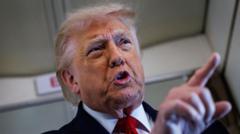
President Trump escalated rhetoric toward Iran on Tuesday, declaring the US will strike "hard" on Wednesday while demanding Tehran accelerate nuclear negotiations. The warning followed Iran's public commitment to retaliate against any American military action, setting up a potential flashpoint in the already fraught relationship between Washington and Tehran.
Trump framed the threatened strikes as consequences for Iran's slowness in reaching a deal, suggesting the administration views military pressure as a negotiating tactic. The timing remains unclear, though the specific Wednesday deadline signals immediate escalation rather than prolonged diplomatic channels.
Iran's Supreme Leader and military commanders responded with defiance, pledging swift response to any attacks. This tit-for-tat posturing reflects the collapse of the 2015 nuclear deal under Trump's first term and the subsequent return to "maximum pressure" sanctions.
The threat arrives amid ongoing tensions over Iran's nuclear program advancement. Tehran has enriched uranium to higher purity levels and expanded centrifuge operations since the US withdrew from the JCPOA in 2018. Negotiations to restore the agreement have stalled repeatedly, with neither side willing to move first on key concessions.
Market watchers flagged oil price sensitivity to any military action. Crude futures typically spike on Iran conflict fears given the nation's strategic position controlling Strait of Hormuz shipping routes. Energy sectors in both US and European markets braced for volatility.
Trump's ultimatum-style diplomacy departs from traditional negotiation patterns, compressing timelines and removing off-ramps for de-escalation. Military analysts noted the Wednesday deadline provided minimal runway for diplomatic last-minute breakthroughs, suggesting the administration views the threat as firm rather than negotiating theater.
The standoff underscores deepening US-Iran hostility with limited international mediation structures in place. Europe, China, and Russia remained largely silent on the threat, indicating little coordinated diplomatic intervention expected.