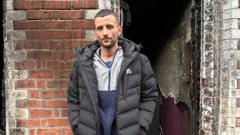
A night of violent unrest in Belfast forced residents to evacuate their homes after disorder erupted following a knife attack in the city's north. The incident left communities shaken and displaced as fires consumed properties during the chaos.
Residents described harrowing experiences of losing their homes to flames. One person stated, "I'll never get over watching my home burn," capturing the trauma inflicted on those caught in the violence. The disorder rippled through neighborhoods as families fled to safety while their residences burned.
The knife attack that triggered the unrest underscores the cycle of violence and retaliation that periodically destabilizes Belfast communities. Sectarian tensions remain a persistent undercurrent in the city, with incidents capable of igniting rapid escalation into street disorder and property destruction.
Emergency services responded to manage the fires and assist displaced residents, though the full scale of damage and displacement remained unclear. The events highlight the fragile balance of peace in Belfast and how quickly isolated criminal acts can spiral into broader community conflict.
Local authorities faced pressure to restore order while communities assessed losses and processed trauma. The destruction of homes represents not just property damage but the upheaval of lives and the renewal of fear in neighborhoods working toward stability.
These incidents reflect ongoing challenges in post-conflict Belfast, where historical divisions continue to surface during moments of tension. The unrest serves as a stark reminder that despite progress, the city remains vulnerable to cycles of violence that displace families and destroy communities from within.