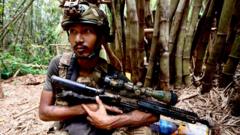
Myanmar's armed opposition forces are retreating across multiple fronts as the military escalates recruitment through coercive conscription tactics. The BBC embedded with rebel fighters to document the deteriorating battlefield situation in the ongoing conflict that has destabilized the country since the 2021 military coup.
Military forces are aggressively pressing young men into service, expanding troop numbers as the junta seeks to regain territory lost to coordinated ethnic armed organizations and People's Defense Force units. These rebel groups have achieved surprising gains over the past two years, capturing strategic towns and stretching the military thin across disparate regions. The forced conscription reflects the junta's desperation to reverse momentum as manpower shortages become acute.
On the ground, frontline conditions deteriorate for rebels despite earlier victories. Supply lines remain fragile. Artillery barrages intensify. The military's superior firepower and ability to replenish troops through forced recruitment give the junta structural advantages that opposition forces cannot match. Eyewitness accounts from BBC correspondents reveal exhausted rebel fighters holding positions with limited ammunition and medical supplies.
The conflict's trajectory shows signs of shifting. What began as widespread, uncoordinated civilian resistance to military rule has evolved into organized armed struggle. Yet the rebels lack external support from major powers and face a military apparatus willing to employ brutal tactics to sustain itself. The coercive recruitment drives underscore how the junta prioritizes survival over legitimacy.
Myanmar's humanitarian crisis deepens as fighting intensifies. Displacement continues. The military's human rights abuses compound the suffering. Without external intervention or a negotiated settlement, the conflict appears locked in a grinding stalemate where the junta's institutional capacity may ultimately outlast rebel momentum.