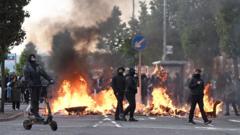
A senior UK terrorism adviser has defended recent public discussion linking immigration to national security concerns, following violence in Belfast. Jonathan Hall KC told the BBC that addressing immigration in the context of national security represents "absolutely legitimate" discourse, even as he acknowledged the destabilising effect of the knife attack disorder that sparked the conversation.
Hall's remarks come after a series of violent incidents in Belfast that authorities have connected to broader integration and social cohesion challenges. His position suggests official acceptance of connecting immigration policy to security threats, a framing that remains contentious in British politics.
The adviser's comments reflect growing official concern about how rapidly social unrest can escalate from isolated incidents into wider disturbances. Hall emphasised that security officials must examine all contributing factors to violence, including demographic and integration patterns, without restriction.
His intervention adds weight to ongoing political debate about UK immigration policy. The government has faced pressure from multiple directions. Right-wing figures amplify immigration-security links to justify stricter borders. Progressive critics argue such framing risks scapegoating communities and oversimplifying complex social problems.
Hall's role as a senior counter-terrorism official gives his position particular credibility within security circles. By explicitly endorsing immigration-security discussions as legitimate, he signals that UK security establishment sees the connection as analytically sound and policy-relevant.
The Belfast situation highlights tensions between maintaining security and managing community relations. Violence tied to integration challenges creates political space for immigration hardliners while complicating efforts to build cohesive diverse communities.
Hall's statement doesn't resolve the underlying debate about how prominently immigration should feature in security responses. It does clarify that official terrorism advisers view the conversation as appropriate, even necessary.