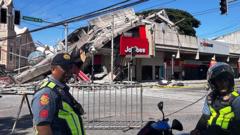
A magnitude-7.8 earthquake struck southern Philippines, killing at least 35 people and triggering tsunami warnings across the Pacific region. The quake hit with enough force to generate small waves in the Philippines, Indonesia, and Japan, prompting evacuation alerts in coastal areas.
The epicenter's location in the southern Philippines placed densely populated regions at immediate risk. Rescue operations began immediately as authorities assessed damage to infrastructure and searched for survivors in collapsed structures. The death toll reflected the quake's intensity and the vulnerability of communities in the affected zone.
Tsunami waves, though small, reached multiple countries across the region. Indonesia and Japan activated monitoring systems and issued advisories to residents in coastal communities. The Pacific Tsunami Warning Center tracked the waves' progression, though no major inundation was reported.
Earthquakes in the Philippines occur regularly due to the country's position along the Pacific Ring of Fire, a seismically active zone where multiple tectonic plates converge. The 7.8 magnitude classified this event as a major earthquake capable of causing widespread destruction. Southern Philippines experiences frequent seismic activity, but tremors of this magnitude cause significant casualties and infrastructure damage.
Emergency response teams mobilized across affected provinces. Healthcare facilities prepared for mass casualties as reports of injuries continued coming in. The Philippine government coordinated with regional partners to provide humanitarian assistance and monitor ongoing seismic activity.
This earthquake joins a pattern of major seismic events affecting the Asia-Pacific region, underscoring the geological instability affecting millions of residents across the zone. Recovery efforts will likely span weeks as communities rebuild and assess the full extent of damage.