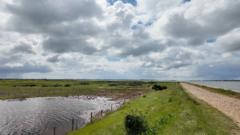
Hampshire's Pagham Harbour nature reserve faces collapse as aging flood defences deteriorate, threatening one of England's most significant wetland habitats. The reserve supports thousands of migratory birds and rare species dependent on its saltmarsh and mudflat ecosystems.
Local conservation groups warn that without urgent investment, the defences will fail within years, allowing seawater to breach protected areas designed to keep tides out. The breach would trigger saltwater intrusion across freshwater marshes, fundamentally altering the habitat's delicate balance. Species including Eurasian curlews, avocets, and specialized invertebrate populations face displacement or extinction from the site.
The defences date back decades. Maintenance costs have mounted while funding sources dwindle. Environment Agency officials acknowledge the infrastructure requires replacement but cite budget constraints and competing priorities across England's increasingly vulnerable coastline. Climate change accelerates sea-level rise and storm surge intensity, placing greater pressure on aging barrier systems nationwide.
Pagham Harbour holds international designation under the Ramsar Convention, binding the UK to protect its ecological character. The reserve also safeguards water quality for surrounding communities and provides carbon sequestration through saltmarsh vegetation.
Conservation bodies have escalated calls for central government intervention, arguing that losing such a reserve contradicts Britain's environmental commitments and biodiversity targets. The defences represent a bottleneck decision point. Repair costs now measure in millions. Abandonment of the site would cost immeasurably in ecological terms.
The situation reflects a broader pattern across British nature reserves facing similar threats from underinvestment and climate pressures. Pagham's case demonstrates how infrastructure failures cascade into environmental disaster without preventive action.