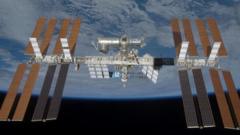
Five astronauts sheltered in their spacecraft modules while Russian cosmonauts attempted repairs on the International Space Station's Soyuz tunnel area. The precautionary measure activated after a potential air leak surfaced during maintenance work on the Russian segment of the orbiting laboratory.
The incident unfolded as crews worked on a known issue affecting the docking tunnel that connects visiting spacecraft to the station. Russian engineers initiated the safe-haven protocol, requiring the five astronauts to retreat to their Soyuz and crew Dragon capsules. These vessels serve as lifeboats, allowing rapid evacuation if the situation deteriorated. The decision reflected standard ISS operational procedure when pressure integrity becomes uncertain.
The Russian team completed repairs without major incident. Station pressure remained stable throughout, and all crew members returned to normal station operations once engineers confirmed the tunnel area secure. Mission control monitored the situation continuously from Earth.
The ISS has weathered similar air leaks before. In recent years, Russian modules have experienced multiple micro-fractures. Previous incidents prompted lengthy investigations and repair missions. This repair attempt represents ongoing efforts to maintain the aging Russian segment, which launched components nearly two decades ago.
The station orbits 250 miles above Earth with rotating crews from NASA, ESA, and Roscosmos. Air-tightness is mission-critical. Even small pressure losses compound over time. Both space agencies maintain strict protocols for pressure anomalies, treating any leak threat as potentially serious until resolved.
The successful repair demonstrates the trained response systems that keep the ISS operational despite its complex, multi-national infrastructure and aging hardware. Regular maintenance and swift decision-making continue defining safe operations on humanity's only permanent space outpost.