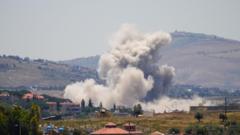
Hezbollah rejected a ceasefire agreement that Israel and Lebanon reached with U.S. mediation on Wednesday night. The militant group's refusal marks a major obstacle to ending the cross-border conflict that has escalated throughout 2024.
The U.S. facilitated renewed negotiations between the two parties, producing what both Israel and the Lebanese government viewed as a breakthrough deal. However, Hezbollah, which operates independently of Lebanon's formal government structures, announced it would not accept the terms. The group commands significant military resources and operates as a state-within-a-state in parts of Lebanon, giving it effective veto power over any ceasefire that affects its operations.
The rejection complicates the diplomatic landscape significantly. Lebanon's government had backed the agreement, hoping to halt the fighting that has displaced tens of thousands of civilians and caused widespread destruction in the country's south. Israel had similarly signaled readiness to pause operations under the proposed terms. Hezbollah's independent stance undercuts both positions and suggests the conflict will likely persist without the group's formal consent.
Hezbollah has previously rejected ceasefire proposals, citing its resistance agenda against Israel and demands for Palestinian solidarity. The group, designated as a terrorist organization by the United States and Israel but viewed as a legitimate political and military force by its supporters, has sustained months of direct confrontation with Israeli forces along the Lebanon-Israel border.
The rejection signals that de-escalation remains elusive despite diplomatic efforts from the U.S. and international stakeholders. Without Hezbollah's participation, any ceasefire lacks enforceability on the ground, where the group maintains both military strength and political control over significant territory.