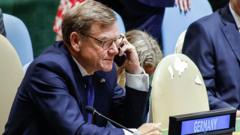
Germany's failed bid for a non-permanent seat on the UN Security Council has exposed Moscow's diplomatic muscle. Johann Wadephul, a senior German politician, directly accused Russia of orchestrating opposition to Berlin's candidacy, citing Germany's unwavering military and financial support for Ukraine as the flashpoint.
The "bitter defeat," as German officials characterized it, underscores how the Ukraine conflict has fractured global diplomatic alignments. Russia weaponized its veto power and diplomatic networks to punish Germany for stance. Germany faced stiff competition and failed to secure the two-thirds majority required among the 193 UN member states, a setback that highlights Moscow's ability to mobilize allied nations and swing votes in its favor.
The loss carries real consequences. A Security Council seat would have amplified Germany's voice on global crises and reinforced its status as Europe's leading power. Instead, Germany must watch from the sidelines as Russia maintains its permanent seat with veto authority, a position allowing Moscow to block any resolution it opposes. This dynamic has become increasingly relevant as the Security Council remains deadlocked on Ukraine itself, with Russia repeatedly blocking condemnation and accountability measures.
Germany's support for Ukraine includes billions in military aid and sanctions enforcement against Russia, making Berlin a natural target for Moscow's diplomatic retaliation. The vote revealed how deeply polarized the UN has become, with Western nations united behind Germany but unable to overcome Russian lobbying in the Global South and among nations seeking to maintain neutrality.
The setback forces Berlin to recalibrate its approach to UN diplomacy while reinforcing a broader reality: Russia's permanent Security Council seat ensures it can punish its adversaries through institutional mechanisms long after battlefield dynamics shift.