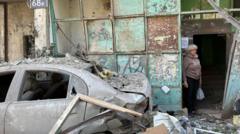
A Russian strike on a Kyiv neighbourhood left residential buildings damaged and residents traumatized as residents emerged from shelters to find their homes destroyed. The attack targeted a sleepy neighbourhood in Ukraine's capital, with residents describing the psychological toll alongside the physical destruction. One resident captured the emotional weight of the assault, saying authorities would rebuild structures but the psychological scars would linger far longer than reconstruction timelines.
The strike marks another chapter in Russia's ongoing aerial campaign against Ukrainian civilian areas. Kyiv has endured repeated bombardment throughout the war, with residential zones consistently targeted despite international condemnation. The attack forced residents into underground shelters, a routine that has become normalized for many living in the capital.
Images from the scene show multi-storey apartment buildings with facades blown away, rubble scattered across streets, and emergency responders working through wreckage. The scale of damage reflects the intensity of Russia's air offensive, which has escalated attacks on civilian infrastructure as ground operations have stalled.
Residents face the dual burden of physical displacement and psychological trauma. The destruction of homes represents not just property loss but the erasure of personal spaces and memories. Repeated exposure to such attacks has created a collective sense of vulnerability across the city's civilian population.
Kyiv's resilience has become a defining narrative of the war, yet each new strike tests that resilience further. The contrast between officials' reconstruction promises and residents' emotional wounds reveals the gap between material recovery and human healing in conflict zones.