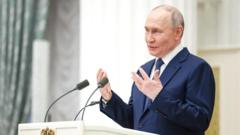
Vladimir Putin shows no signs of softening his position on Ukraine even as Russia intensifies military operations across the battlefield. Yet within Russia itself, a shift in public conversation about the war has begun to emerge among circles typically aligned with the Kremlin.
The escalation of Russian attacks contradicts any notion of de-escalation talks. Moscow continues to prosecute the conflict with significant force while Putin maintains his hardline stance on territorial demands and conditions for any settlement. Domestically, however, the picture grows more complicated.
More than four years of sustained warfare have worn on Russian society in ways that ripple beyond typical war-weariness. Even figures close to Putin's inner circle have begun raising concerns about the conflict's trajectory and costs. These voices don't suggest a fundamental challenge to Putin's authority, but they do indicate fractures in the unified messaging that typically characterizes Russian state discourse.
The Kremlin's control over information remains intact. State media continues to frame the war through a nationalist lens. Yet discussions among Putin loyalists, oligarchs, and political insiders hint at growing anxiety about the war's economics, military sustainability, and diplomatic dead-ends. Some worry about international isolation. Others question the timeline for victory.
This doesn't translate into organized opposition or pressure for immediate peace. Russia's security apparatus keeps dissent firmly contained. But the fact that even establishment figures are privately voicing reservations suggests the war's burden extends deeper into Russian society than official narratives acknowledge.
Putin's unyielding public posture masks internal tensions he cannot completely suppress. The gap between his stated resolve and private doubts among allies reveals the strain of prolonged conflict on Russia's political system. Whether these murmurs of concern will influence policy remains unclear, but they mark a notable departure from the monolithic support the Kremlin once commanded on Ukraine.