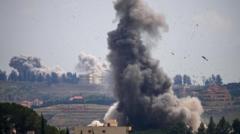
Israel launched strikes across southern Lebanon on Wednesday, maintaining pressure on Hezbollah positions even as a fragile ceasefire framework took hold following US-brokered negotiations. The Israeli military did not target Beirut or other major population centers, signaling reluctance to breach the nascent truce outlined by the Biden administration.
The partial halt marks a dramatic shift from months of escalating cross-border conflict. Israeli airstrikes had intensified throughout fall 2024, devastating neighborhoods across Lebanon's capital and southern regions. Hezbollah responded with rocket barrages aimed at Israeli civilian and military targets, drawing Israeli retaliation in an tit-for-tat cycle that killed hundreds and displaced tens of thousands.
The ceasefire framework, brokered by the US State Department, established a 60-day period for de-escalation. Lebanese forces are expected to deploy southward to reassert government control in the border region, while Israeli troops will gradually withdraw from Lebanese territory. The agreement hinges on Hezbollah ceasing attacks and Israel avoiding strikes in populated areas.
Israeli officials stated they retained the right to resume operations if Hezbollah violated terms. Hezbollah's response remained guarded, with the militant group's leadership expressing skepticism about Israeli compliance. Hezbollah maintains deep roots in southern Lebanon, where it provides social services and commands significant political influence, complicating any final withdrawal scenario.
The strikes continued despite the truce announcement, targeting what Israel claims were Hezbollah operational positions. The maneuver suggests both sides are testing boundaries rather than fully committing to peace. International observers worry that any significant escalation, or perceived violation of the ceasefire, could reignite the broader conflict and destabilize the already fragile region.