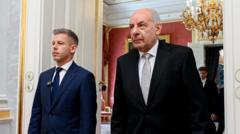
Hungary faces a constitutional standoff after Prime Minister Péter Magyar demanded that President Tamás Sólyom resign, and Sólyom refused. The clash reveals deepening fractures within Hungary's political establishment.
Magyar's ultimatum targets a president closely aligned with Viktor Orbán's two-decade tenure. Sólyom, who served as Constitutional Court judge before Orbán elevated him to the presidency, represents continuity with the previous administration's institutional grip. Magyar has signaled willingness to pursue formal removal proceedings if Sólyom does not vacate voluntarily.
This confrontation emerged as Magyar consolidated power following his centrist coalition's electoral gains. His government views the presidency as an obstacle to dismantling what critics call Orbán-era institutional capture. Sólyom's refusal marks a rare moment of institutional resistance within Hungary's executive branch.
The constitutional mechanism for presidential removal exists but remains untested in modern Hungarian politics. Magyar's party would need parliamentary supermajority backing to force Sólyom from office, a threshold that appears viable given recent electoral dynamics. Legal scholars debate whether the presidency itself carries sufficient powers to justify such a dramatic confrontation.
The standoff carries symbolic weight beyond procedural mechanics. It signals Magyar's determination to purge Orbán loyalists from state institutions, a priority for his reform agenda. Sólyom's defiance suggests some figures from the previous era intend to resist rather than fade quietly.
Orbán, now leading opposition forces, has remained relatively silent on the clash. His absence from public commentary underscores Hungary's shifting political realignment. Magyar's move accelerates the power transition that Hungarian voters triggered at the ballot box, though it risks deepening institutional instability during a period of consolidation.
The coming weeks will reveal whether Magyar possesses sufficient parliamentary will to follow through on his threat, or whether a negotiated exit emerges.