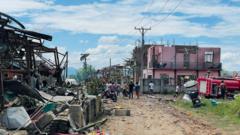
A major explosion in a rebel-controlled village in Myanmar killed dozens of people, with insurgent groups blaming the blast on mining operations near the Chinese border.
The explosion struck the village, which sits under the control of anti-junta forces operating in Myanmar's conflict zones. Insurgent leaders attributed the incident to improper handling of explosives used in nearby mining activities. Mining operations in border regions have long posed safety risks, particularly in areas where armed groups maintain control and regulatory oversight remains minimal.
Myanmar's border regions with China have become increasingly lawless since the military coup in February 2021. Anti-junta insurgencies have fragmented into dozens of armed groups, many controlling territory and conducting economic activities including illegal mining to fund operations. These areas operate largely outside the reach of central government authority, creating dangerous conditions for civilians caught in the crossfire between military forces and resistance fighters.
The casualty toll reflects the escalating humanitarian cost of Myanmar's ongoing civil conflict. Beyond direct combat deaths, civilians face secondary dangers from infrastructure collapse, environmental degradation from illegal mining, and inadequate emergency services in rebel-held zones. The blast adds to mounting evidence that ungoverned spaces in Myanmar have become tinderboxes for preventable disasters.
China maintains significant economic interests along its Myanmar border, with trade routes and resource extraction driving much cross-border activity. Chinese authorities have faced pressure to regulate operations conducted by actors operating in the border region, though enforcement remains inconsistent.
The explosion underscores how Myanmar's fragmented control creates compounding crises. Residents in rebel-held areas endure both active warfare and the secondary consequences of armed group governance, where safety standards and emergency infrastructure lag far behind civilian-controlled regions.