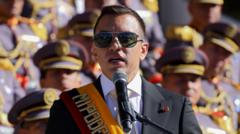
Ecuador's President Daniel Noboa faces accusations of election interference after offering to cancel tariffs on Colombian goods in a conversation with right-wing presidential candidate Andrés Pardo Páez, just days before Colombia's Sunday election.
The tariff cancellation pledge emerged following a phone call between Noboa and Pardo Páez, prompting complaints that Ecuador's leader attempted to sway Colombian voters by dangling economic benefits to a specific candidate. Colombia's electoral authorities received allegations that this constituted improper foreign involvement in their democratic process.
Pardo Páez, representing the conservative faction in Colombia's presidential race, stands to benefit from voter sentiment favoring free trade and reduced import costs. Ecuador's offer to eliminate tariffs would directly appeal to Colombian consumers and businesses facing higher prices on Ecuadorian products, potentially boosting Pardo Páez's electoral chances among economically focused voters.
The timing amplifies the controversy. Election day arrives Sunday, leaving minimal time for voters to process the tariff announcement or for Colombian authorities to formally investigate. Noboa's office has not publicly clarified the rationale behind the tariff cancellation or whether it was conditional on electoral outcomes.
This incident reflects broader tensions between the two Andean neighbors. Trade disputes have strained bilateral relations, with tariffs serving as recurring flashpoints. Ecuador's sudden willingness to negotiate tariffs suggests either a strategic recalibration of regional policy or, as critics argue, a calculated move to influence Colombian politics.
Colombian election officials now face pressure to assess whether Noboa's actions violated international norms against foreign interference in sovereign elections. The episode underscores how trade policy intersects with electoral politics in Latin America, where economic announcements can reshape voting behavior in tight races.