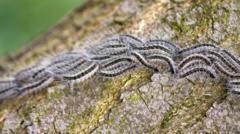
Public health authorities across Europe have escalated warnings about oak processionary moth caterpillars, which pose serious health risks to humans and animals. The caterpillars carry toxic hairs that trigger severe allergic reactions, including breathing difficulties, asthma attacks, and painful skin rashes upon contact.
The oak processionary moth (Thaumetopoea processionea) has expanded its range northward as temperatures rise, reaching the UK and spreading across continental Europe. Exposure to the caterpillar's microscopic barbed hairs can occur through direct contact or inhalation, creating hazards even for people who don't physically touch the insects. Schools and parks in affected regions have closed preventively when infestations occur.
Environmental officials stress that the caterpillars feed on oak trees, making parks, forests, and suburban areas primary danger zones during late spring and summer months. The hairs remain toxic even after the caterpillar dies or sheds its skin, persisting on trees and ground vegetation where children play.
Health services across Europe report rising cases of contact dermatitis and respiratory complications linked to oak processionary moth exposure. Severe reactions require medical intervention, with some cases resulting in hospitalization. Veterinarians also report similar poisoning in dogs and livestock that encounter the caterpillars.
Authorities recommend avoiding oak trees during peak caterpillar season, washing exposed skin and clothing immediately after outdoor exposure, and seeking medical attention for unexplained rashes or breathing problems. Professional pest control teams equipped with protective gear handle infestations in populated areas. Scientists attribute the caterpillar's expansion to warming climates, which extend suitable breeding seasons and allow survival at higher latitudes where the species previously couldn't establish populations.