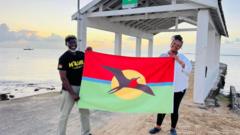
Caribbean islanders face mounting barriers to their own beaches as foreign developers lock down prime coastal land. In Barbuda, Grenada, and Jamaica, campaigners report systematic exclusion from ancestral shorelines, a shift driven by luxury resort construction and private property claims that block public access.
The pattern mirrors broader real estate consolidation across the Caribbean, where foreign capital has accelerated property purchases over the past two decades. Developers from North America and Europe acquire beachfront parcels, then erect fences, gates, and security checkpoints that functionally privatize what residents once considered community space. Local governments, hungry for tax revenue and foreign investment, often green-light these projects with minimal public consultation.
Barbuda residents describe losing access to fishing grounds their families worked for generations. In Grenada, developers have claimed stretches previously used for informal settlements and recreation. Jamaica's north coast, a tourism hotspot, has seen particularly aggressive consolidation. Tourism boards tout these developments as economic drivers, yet locals capture minimal benefit. Jobs typically go to migrant workers; profits flow offshore.
The legal landscape complicates resistance. Caribbean nations inherited colonial property laws that favor private ownership over customary coastal rights. While some jurisdictions technically recognize public beach access, enforcement remains weak against well-funded developers with government connections. Campaigners argue this creates a two-tier system where foreign wealth trumps citizenship.
Environmental concerns layer onto the access issue. Development often destroys mangroves, coral reefs, and nesting sites for endangered sea turtles. Coastal erosion accelerates when natural buffers are stripped away. The very ecosystems that attract tourism face degradation from the tourism industry itself.
Some islands have begun tightening foreign ownership restrictions. But enforcement varies wildly, and existing investors operate under grandfathered exemptions. Activists push for beach access legislation and reparative frameworks that return coastal management to communities. The stakes are economic, cultural, and ecological. Without intervention, Caribbean islanders risk becoming tourists in their own archipelago.