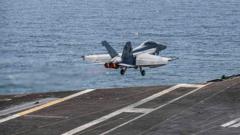
The United States conducted a second round of strikes against Iranian targets within 72 hours, escalating tensions amid an already delicate ceasefire between the two nations. The attacks occurred while negotiations to resolve a three-month conflict remain stalled and fragile.
The timing of these strikes undermines diplomatic efforts currently underway to de-escalate the region. Both military actions suggest the US views Iranian activity as a direct threat requiring immediate response, even as diplomats work toward a negotiated settlement. The sequence of strikes indicates a pattern of provocation or retaliation rather than isolated incidents.
Regional stability hangs in the balance. The repeated military actions risk triggering a cycle of escalation that could derail talks altogether. Iran has previously responded to US strikes with its own counterattacks, setting precedent for further retaliation. Each strike brings the possibility of miscalculation that could spark broader conflict.
The ceasefire itself remains precarious. Military strikes nominally conducted in self-defense operate in a gray zone between peace and war, testing the boundaries of what both sides consider acceptable within their nominal truce. The US justification for these strikes remains unclear from the available reporting, but the proximity of two separate actions suggests sustained pressure on Iranian positions or capabilities.
Negotiations to end the three-month war face a critical test. Diplomatic channels typically cool after military action, not accelerate. These strikes send a message to Iranian leadership about US resolve but potentially harden Tehran's negotiating position. International mediators watching this situation must now assess whether military pressure strengthens or sabotages the path toward a permanent resolution.