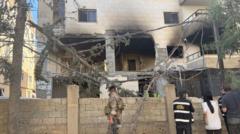
Israel launched a "targeted strike" in Beirut on Monday, marking an escalation in tensions between the two sides following last month's ceasefire agreement. The strike hit Lebanon's capital, an area that had remained largely untouched during months of conflict despite mutual accusations of ceasefire violations.
The Israeli military said the operation targeted a specific location in the city. Hezbollah and Lebanese officials have not yet provided casualty figures or damage assessments, though residents reported hearing explosions across Beirut.
The strike represents a significant breach of the fragile truce established in November, which was supposed to halt fighting between Israeli forces and the Iranian-backed militant group. Both sides had previously traded blame over violations, accusing each other of minor breaches, but direct military action in the Lebanese capital escalates the conflict to a new level.
Beirut's relative safety during the preceding months had offered some stability to civilians in the war-torn country. The capital's sparing from major bombardment contrasted sharply with southern Lebanon and the Bekaa Valley, regions that experienced sustained Israeli airstrikes and ground operations.
The timing of Monday's strike reflects growing friction over ceasefire implementation. International mediators have struggled to maintain the agreement, with both parties citing provocations that warranted defensive responses. Israel's decision to strike an urban center rather than military installations in remote areas suggests a shift in operational strategy.
The Lebanese government condemned the attack as a violation of the ceasefire terms. Hezbollah's response remained unclear as of reporting time, though the group has historically responded to Israeli operations with rocket fire into northern Israel.
Regional tensions remain high as observers assess whether this incident will trigger further escalation or whether diplomatic channels can contain the situation before broader conflict resumes.