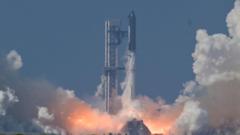
SpaceX's Starship V3 achieved liftoff after an initial launch delay, marking another milestone for the company's fully reusable super heavy-lift vehicle. The rocket represents the most powerful and largest operational system ever built, designed to eventually carry crews and cargo to the Moon, Mars, and beyond.
The test flight follows months of development and regulatory approvals from the Federal Aviation Administration. Starship V3 builds on earlier iterations, with engineers refining thermal protection systems, engine performance, and structural integrity based on previous flight data. Each test generates crucial engineering insights for operational readiness.
Elon Musk's SpaceX continues dominating commercial space launch. The company controls roughly two-thirds of global orbital launch market share and holds multiple NASA contracts for lunar missions under the Artemis program. Starship's development directly supports these government contracts while advancing SpaceX's long-term goal of making Mars colonization viable.
Previous Starship test flights captured public attention through both successes and explosive failures. The V3 variant incorporates design refinements addressing earlier setbacks. Flight test data informs iterative development, a methodology Musk has championed across his companies.
The postponement likely stemmed from standard pre-launch weather checks or technical inspections. SpaceX maintains relatively quick turnaround times between launch attempts compared to industry standards, reducing costs and accelerating development cycles.
This test contributes to SpaceX's broader ecosystem serving government and commercial customers. Successful Starship operations would unlock new revenue streams while reducing per-kilogram launch costs. The company's dominance in satellite deployment through Falcon 9 could expand further if Starship proves commercially viable.