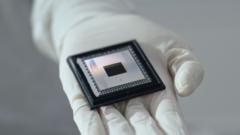
King's College London researchers secured access to Google's latest quantum computing chip, positioning them to tackle fundamental questions in physics and chemistry that classical computers cannot solve. The team plans to leverage the chip's processing power to model complex molecular interactions and natural phenomena at scales previously out of reach for computational research.
Google's quantum chips operate on principles that exploit superposition and entanglement, allowing them to process exponentially more possibilities than traditional silicon-based processors. This access represents a significant milestone for the UK research community, which has been working to establish itself as a leader in quantum computing development and applications.
The research team at King's College intends to focus on problems spanning materials science, drug discovery, and fundamental physics. Their work could accelerate breakthroughs in understanding chemical reactions that shape biological systems and advance the development of new pharmaceuticals and materials. Quantum computers excel at simulating quantum systems, a task that requires exponential time on classical computers.
This collaboration between an elite UK university and Google reflects the growing trend of tech giants opening their quantum infrastructure to academic researchers. Similar partnerships have emerged with IBM and other firms, democratizing access to hardware that costs billions to develop. The arrangement allows researchers to validate quantum algorithms and identify real-world applications before broader commercialization.
The King's College team joins a growing roster of institutions worldwide experimenting with quantum technologies. Their projects could yield practical insights for industries ranging from energy to finance. Success here would strengthen arguments for continued public and private investment in quantum research across Europe, where nations compete aggressively for technological advantage in this emerging field.