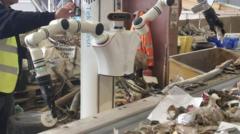
Waste management companies are deploying humanoid robots to sort garbage as labor shortages grip the industry. The move reflects a broader automation trend in sectors struggling to recruit and retain workers.
Recycling and waste sorting have historically relied on manual labor, with workers physically separating materials on conveyor belts. The process is physically demanding, repetitive, and often low-wage work. Staff turnover runs high across the sector, leaving firms unable to fill positions.
Humanoid robots offer a solution. These machines can perform sorting tasks continuously without fatigue or sick days. They navigate waste streams using computer vision and machine learning to identify and separate recyclables from non-recyclables. Early deployments show robots can handle complex sorting decisions that previously required human judgment.
The technology comes as waste management firms face mounting pressure. Population growth and increased consumption drive more waste generation, while environmental regulations demand higher recycling rates. Labor shortages have made meeting these demands difficult. Some facilities report chronic understaffing and delayed processing.
Robot manufacturers position their machines as workforce supplements rather than replacements. They handle hazardous materials exposure and tedious sorting work, freeing human staff for supervisory and maintenance roles. Companies investing in this automation expect faster throughput and lower long-term operating costs.
However, this shift raises questions about employment in waste management. The sector employs hundreds of thousands globally. Large-scale robot adoption could eliminate jobs faster than the industry can retrain workers. Labor advocates warn of displacement without adequate transition support.
The economics remain in flux. Humanoid robots carry high upfront costs, though prices are falling as manufacturing scales. Waste companies calculate whether robot investment pays off against persistent labor costs and turnover. For now, robots target the most repetitive sorting tasks in high-volume facilities where automation economics work best.