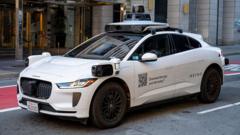
Waymo initiated a voluntary recall affecting thousands of its autonomous vehicles following an April 20 incident in San Antonio, Texas, where an empty robotaxi drove into a flooded creek.
The incident exposed a critical gap in Waymo's autonomous navigation system. The vehicle failed to recognize or avoid hazardous water conditions, instead proceeding into the flooded road without human intervention or override capabilities active at that moment. This reveals a vulnerability in how Waymo's AI perceives environmental threats beyond standard road obstacles.
The recall underscores ongoing challenges in autonomous vehicle safety, particularly in edge-case scenarios involving weather and terrain hazards. While Waymo operates in multiple US markets including San Francisco, Los Angeles, and Phoenix, these vehicles handle thousands of daily trips. A systematic failure in water-hazard detection represents a serious safety liability.
Waymo, the Google-owned autonomous driving subsidiary, has built its reputation on cautious expansion and rigorous testing protocols. Yet the creek incident demonstrates that even extensively mapped and AI-trained systems encounter real-world conditions they haven't adequately learned to navigate. The company's response, a voluntary recall rather than regulatory enforcement, signals confidence in a software fix but also acknowledges the seriousness regulators and the public now demand.
The timing matters. As autonomous vehicles inch toward mainstream adoption, every incident generates headlines and scrutiny. Competitors like Cruise (General Motors) and traditional automakers developing self-driving tech watch how Waymo handles safety lapses. A swift, transparent recall can restore confidence. Delays or inadequate fixes risk regulatory backlash and public skepticism at a moment when robotaxi services need consumer trust to scale.
The fix likely involves updating Waymo's perception algorithms to detect and classify water obstacles more reliably, then pushing software updates across the recalled fleet. How quickly Waymo resolves this and prevents similar gaps in other environmental hazards will shape investor and regulatory confidence in the autonomous vehicle timeline.